
When it comes to keeping your employees safe, an emergency lighting system from Advanced Fire Protection Services Ltd. is a must. We install and maintain emergency lighting systems to ensure that your business will pass fire inspections. We also install photo-luminescent lighting to illuminate stairwells. With a proper exit strategy plan and an up-to-date emergency lighting system on your property, you ensure your business will be safe for everyone.
To stay compliant with the latest building codes and fire safety standards, it’s important to regularly assess and upgrade your emergency exit signage and lighting systems. The Alberta Fire Code has introduced several important updates to enhance building safety, including:
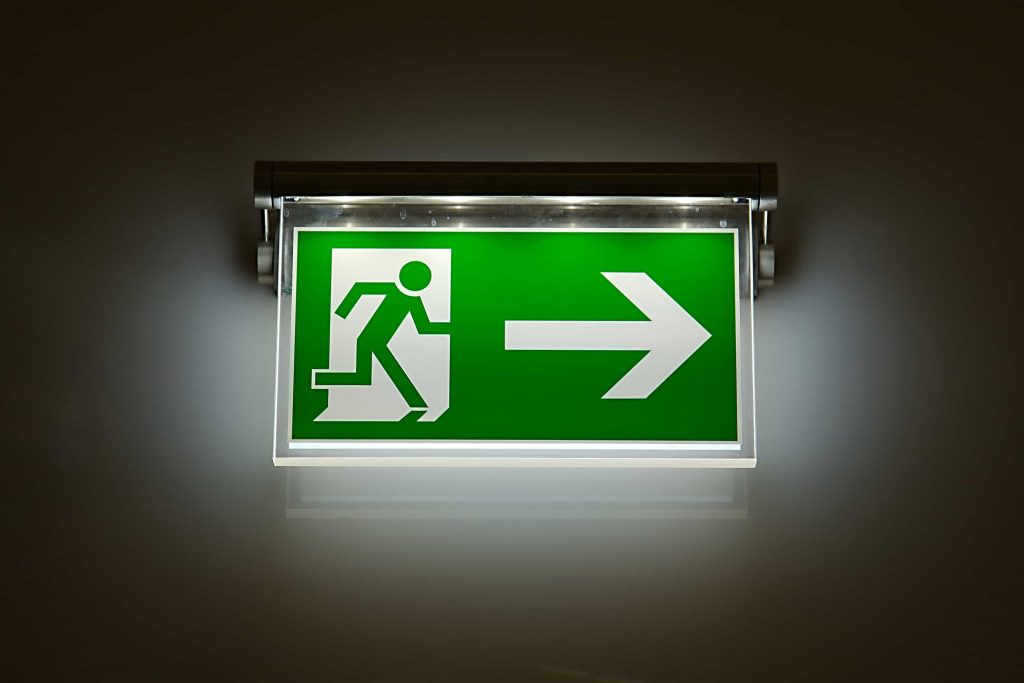
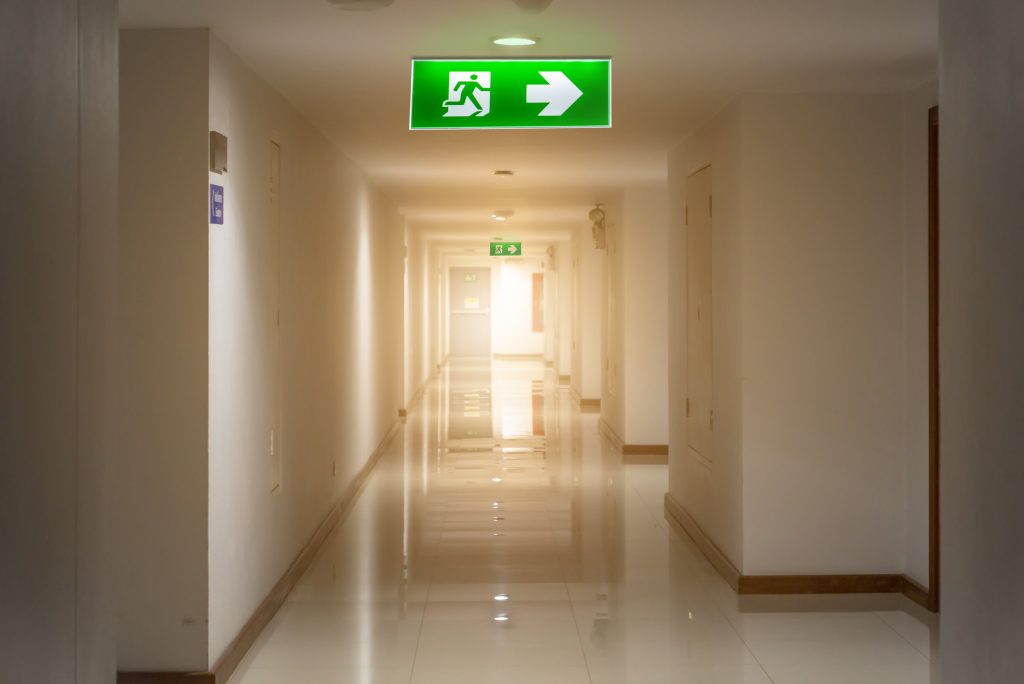
When a power outage occurs, it can create a hazardous environment, particularly in large buildings where visibility is reduced, and essential systems like elevators and lights may stop functioning. However, well-prepared buildings have emergency systems in place to maintain safety during these situations.
Emergency lighting and exit signs are typically powered by backup batteries or generators that activate immediately when the power goes out. These systems ensure that critical areas like stairwells, hallways, and exit routes remain illuminated, allowing occupants to safely evacuate the building if needed. In addition, fire alarms and communication systems are often connected to backup power sources to ensure they remain operational, enabling occupants to stay informed and safe during the outage. Regular maintenance and testing of these backup systems are essential to ensure they work properly when an emergency strikes.
Whether you’re looking to install a new fire suppression system, upgrade your emergency lighting, or ensure compliance with the latest fire codes, our team of experts is here to help. We offer personalized consultations to assess your property’s specific requirements and recommend tailored solutions that enhance safety and protection. Don’t wait until an emergency happens—reach out to us today for a consultation, and let us help you create a comprehensive fire safety plan that gives you peace of mind and ensures the safety of your occupants.
The Alberta Fire Code includes specific regulations regarding emergency lighting systems to ensure the safety of occupants during emergencies such as power failures, fires, or other situations that could compromise visibility.
By following these regulations, building owners and operators can ensure that their emergency lighting systems are effective in enhancing safety during emergencies, helping to guide occupants to safety and reducing the risk of accidents or injuries during evacuations. Compliance with these regulations is critical for meeting fire safety standards and ensuring the well-being of all building occupants.
View More
Proper display of fire safety signs and markings is crucial for guiding occupants to safety during emergencies and for conveying essential information about fire protection systems and procedures. To enhance both visibility and functionality, it’s important to follow fire code guidelines for the design, placement, and maintenance of these signs.
Fire safety signs and markings must be clear and highly visible to ensure quick and safe evacuation. These signs should be unobstructed at all times, enabling individuals to quickly locate exits, fire extinguishers, and other critical safety equipment during an emergency.
Adhering to specific standards regarding the size, color, and illumination of fire safety signs is essential. These standards ensure consistency and legibility, making it easier for occupants to recognize and respond to the signs during an emergency. For instance, exit signs must be prominently displayed and properly illuminated, ensuring they can be seen in low-light conditions or during power outages.
The effectiveness of fire safety signs largely depends on their placement. Signs should be strategically located at key points such as exits, fire extinguisher locations, and along evacuation routes. Regular maintenance and inspections are necessary to keep these signs in optimal condition and ensure they comply with current safety standards. This includes checking for damage, fading, and ensuring that illumination systems are functioning properly.
Beyond basic fire safety signs, buildings should also incorporate additional markings like directional arrows and floor identification signs. These are particularly useful in larger or more complex structures, helping to guide occupants through the building during an emergency. Properly maintained and illuminated markings reduce confusion and ensure that occupants can quickly and confidently navigate to safety.
By following these guidelines, you can significantly enhance the safety and preparedness of your building. At Advanced Fire Protection Services, we offer expert consultation and services to help you design, install, and maintain fire safety signs and markings that meet regulatory requirements and ensure the safety of all building occupants.
View More
Yes, wireless emergency lighting systems are available. Wireless technology allows for flexible installation and easy expansion of the system. However, it is important to ensure proper signal reliability and battery life in wireless systems.
View More
Yes, it is possible to integrate emergency lighting systems with building automation systems. Integration allows for centralized control and monitoring of emergency lighting, enabling automated testing, status monitoring, and notifications.
View More
Yes, outdoor areas such as parking lots, walkways, and building exteriors may have specific requirements for emergency lighting. These requirements often include illumination levels, placement of fixtures, and compliance with local regulations.
View More
Yes, emergency lighting systems can be customized to meet specific requirements and applications. This may include specialized lighting designs, such as anti-panic lighting or hazardous location lighting, tailored to the unique needs of the facility.
View More